Heat stress is the most underreported occupational health hazard in Australia. Each summer, thousands of outdoor workers are exposed to conditions that meet the legal threshold for employer intervention under the Work Health and Safety Act , conditions that, in many workplaces, go unmanaged because the obligation is poorly understood or the controls are seen as impractical.
This article covers what the WHS Act actually requires, how the hierarchy of controls applies to heat stress, where misting systems fit in that hierarchy, and what documentation employers need to maintain to demonstrate compliance. It applies to construction sites, outdoor event staff, agricultural workers, councils, landscaping companies and any other employer with outdoor workers exposed to significant heat.
The WHS Act Duty of Care for Heat Stress
Section 19 of the Work Health and Safety Act 2011 (and its state and territory equivalents) imposes a primary duty of care on persons conducting a business or undertaking (PCBUs) to ensure, so far as is reasonably practicable, that workers are not exposed to risks to their health and safety. Heat stress is a health and safety risk. The duty applies.
"Reasonably practicable" is defined in the Act as what is reasonably able to be done, taking into account:
- The likelihood that the hazard will occur
- The degree of harm that might result
- What the person knows or ought reasonably to know about the hazard and the ways of eliminating or minimising it
- The availability and suitability of ways to eliminate or minimise the risk
- The cost of eliminating or minimising the risk relative to the risk itself
In the context of outdoor work in Australian summer conditions, the likelihood of heat stress occurrence is high, the potential harm is severe (heat exhaustion, heat stroke, death), and the means of controlling it are well-documented and reasonably affordable. This means the "reasonably practicable" threshold for intervention is not high.
The Hierarchy of Controls for Heat Stress
Australian Work Health and Safety Regulations require that the hierarchy of controls be applied when managing workplace hazards. The hierarchy, from most to least effective, is:
- Elimination , Remove the hazard. For heat stress, this means scheduling outdoor work outside of peak heat periods. Where this is not possible, it does not eliminate the obligation , it moves the requirement down the hierarchy.
- Substitution , Replace the hazard with a lesser risk. For heat stress, this might mean substituting heavy manual work with mechanised equipment that reduces physical exertion in heat, or relocating tasks to shaded or air-conditioned environments where possible.
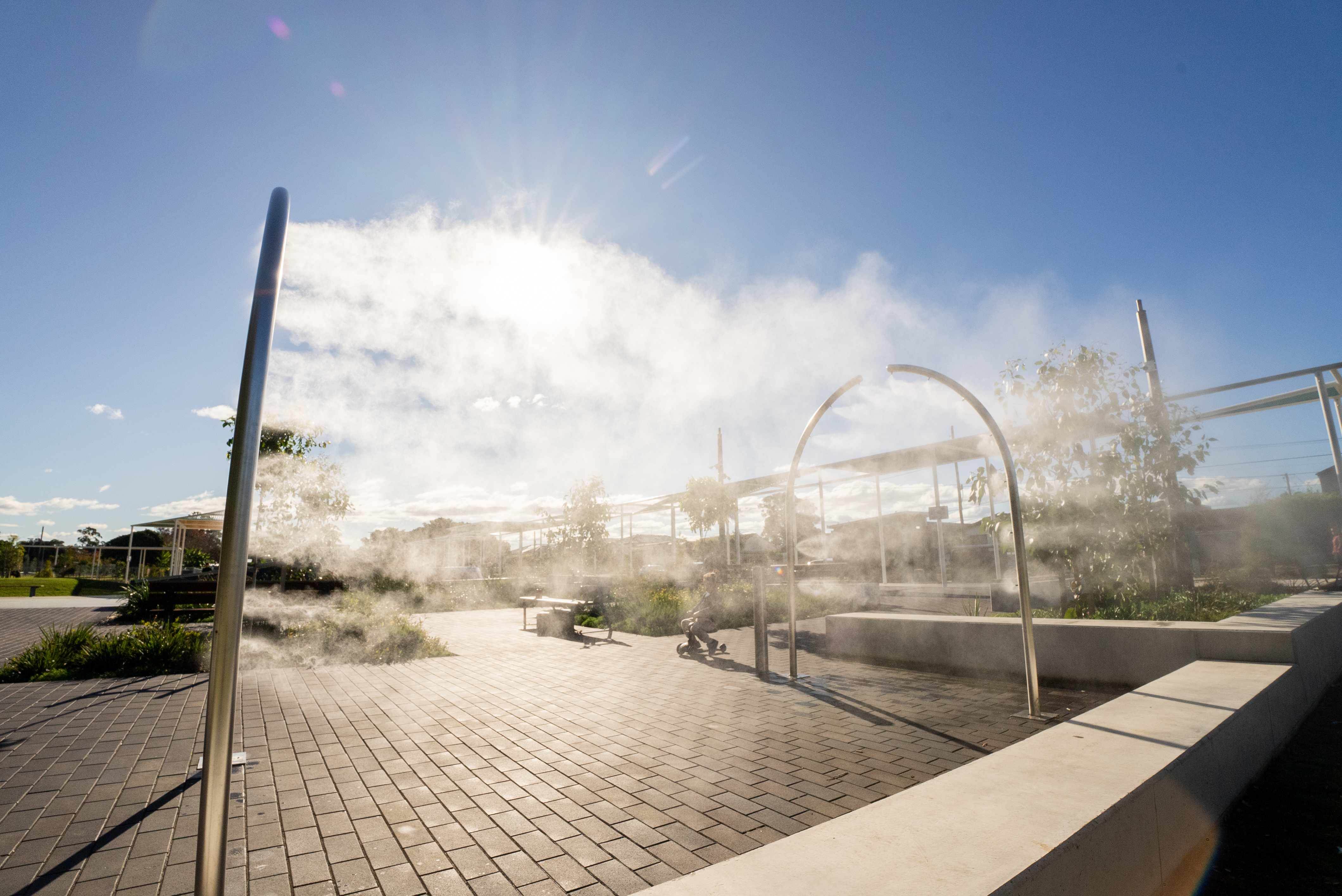
- Engineering controls , Physically control the hazard through design. For outdoor heat stress, this includes fixed shade structures, cooling systems, misting systems and ventilation. This is where misting sits in the hierarchy , as an engineering control that reduces the ambient temperature workers are exposed to.
- Administrative controls , Change the way work is done. For heat stress: heat monitoring programs, mandatory rest breaks in cool areas, work-rest cycles, buddy systems, acclimatisation programs.
- Personal protective equipment , Last resort. Cooling vests, wet towels, hydration management. The least effective control because it relies on worker compliance and does not reduce the environmental heat load.
The critical point is that the hierarchy must be worked through in order. Administrative controls and PPE alone are not sufficient if engineering controls are reasonably practicable. Where misting systems can reduce ambient temperatures by up to 12°C, and where the cost is proportionate to the hazard, the engineering control obligation is engaged.
Trigger Temperatures and WBGT Thresholds
Safe Work Australia's guidance on managing heat in the workplace references Wet Bulb Globe Temperature (WBGT) as the primary measurement tool for heat stress risk. WBGT combines air temperature, humidity, radiant heat and air movement into a single index that reflects the physiological heat load on a worker.
General trigger thresholds for medium-intensity outdoor work (e.g., construction, landscaping) are approximately:
- WBGT 25–28°C: Increased monitoring, active hydration management
- WBGT 28–32°C: Engineering and administrative controls required; work-rest cycles should be implemented
- WBGT above 32°C: High-risk conditions; continuous monitoring and active cooling required for continued outdoor operations
In Sydney, Perth, Brisbane and Adelaide, WBGT thresholds above 28°C are reached on many summer working days. This is not a theoretical compliance issue , it is a regular operational reality for outdoor workers in these cities.
Where Misting Systems Satisfy the Engineering Control Obligation
A well-designed misting system in an outdoor work area can reduce ambient dry-bulb temperature by 4–12°C, depending on ambient humidity and system design. This directly reduces WBGT and the physiological heat load on workers in the cooled zone.
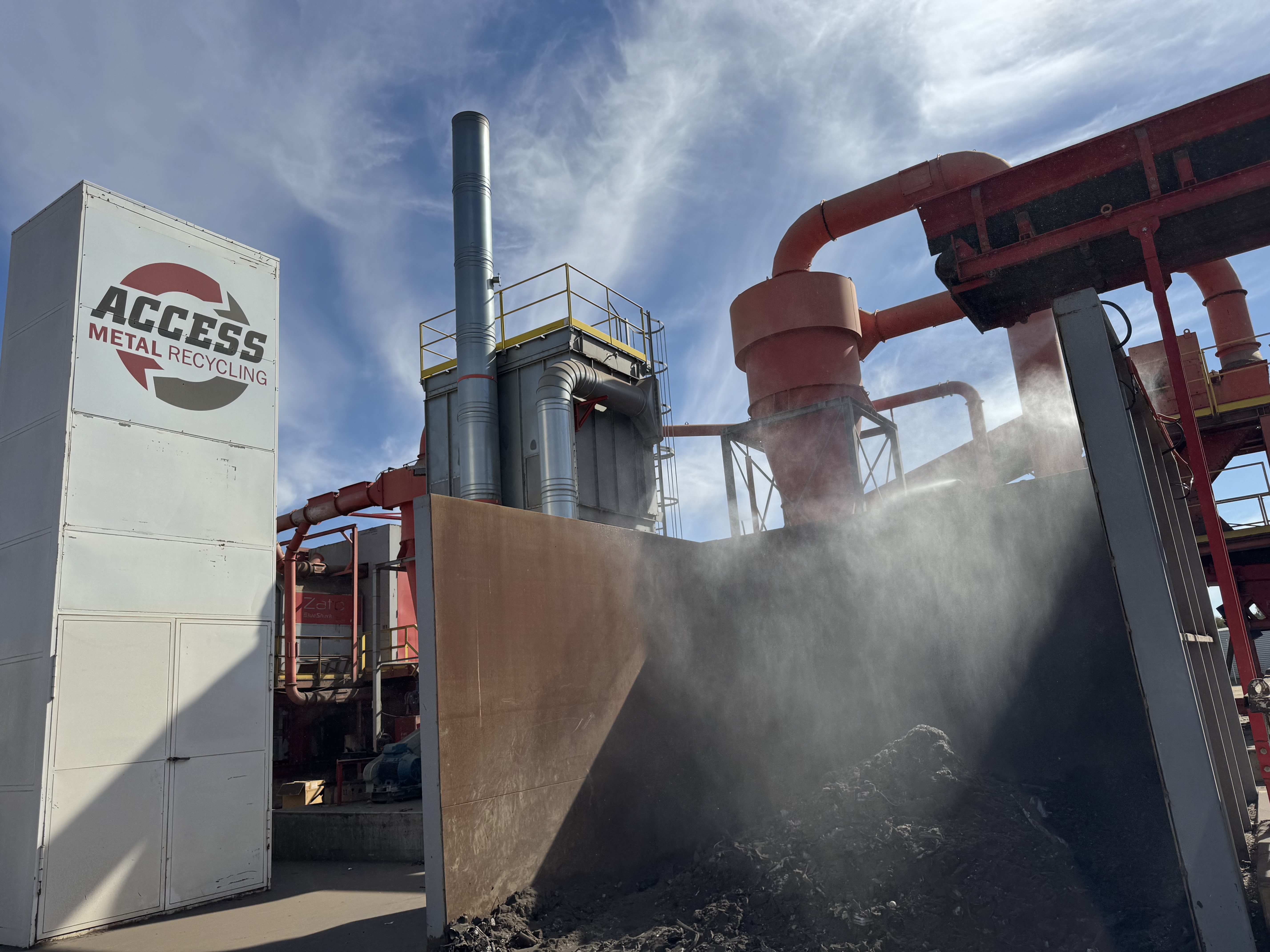
For fixed outdoor work locations , construction site sheds, tool storage areas, lunch rooms, outdoor event venues, agricultural packing sheds , a fixed misting system provides a passive engineering control that operates continuously without relying on worker behaviour. This satisfies the highest-order engineering control requirement in the hierarchy.
For mobile work locations, portable misting systems , trailer-mounted or skid-mounted cooling units , provide a deployable engineering control that can be positioned at the primary work zone. This is particularly relevant for large outdoor events, construction worksites with changing work fronts, and agricultural operations.
Documentation Requirements
To demonstrate compliance with the WHS heat stress obligation, employers should maintain:
- Heat stress risk assessment , A documented assessment of the heat stress risk at each work location, including estimated WBGT on typical peak summer days and the controls in place at each level of the hierarchy.
- Control measure record , Documentation of the specific controls implemented, including misting system installation details, shade structures, rest break schedules and PPE provisions.
- Monitoring records , Temperature and humidity logs for working days where heat stress risk is elevated.
- Maintenance records , For engineered controls, maintenance records demonstrating the systems were operational and maintained during the risk period.
Sector-Specific Obligations
Construction
NSW SafeWork and equivalent state bodies have issued specific guidance for heat management on construction sites. Principal contractors have an obligation to manage heat stress for all workers on site , including subcontractors. This creates a direct obligation for principal contractors to ensure cooling controls are in place at site amenities and high-heat work zones.
Events
Event operators have a duty to protect both workers and, in some jurisdictions, members of the public attending events. For outdoor events in summer, cooling provisions at staff areas and high-density public spaces are increasingly expected by venue operators, councils and event insurers.
Agriculture
Agricultural workers , particularly in fruit picking, packing sheds and vineyard operations , are among the most at-risk groups for heat illness. Packing shed misting systems and outdoor work area cooling are engineering controls that directly address this risk at the source of the hazard.
youmist designs and installs misting systems for outdoor workplaces, construction sites, events and agricultural facilities , providing engineering-level heat control that satisfies WHS obligations.