If you operate a waste transfer station under an EPA environment protection licence, dust conditions are almost certainly written into that licence. The question most operators face is not whether they need to manage dust , it's what "adequate measures" actually looks like in practice, and what documentation demonstrates compliance when an EPA officer arrives on site.
This guide covers what EPA dust licence conditions typically specify, how fixed high-pressure misting systems satisfy those conditions at source, and what documentation you need to maintain as an ongoing compliance record.
What EPA Dust Licence Conditions Actually Specify
NSW EPA environment protection licences issued to waste facilities under the Protection of the Environment Operations Act 1997 (POEO Act) typically include conditions under the "Pollution control requirements" section relating to dust. These conditions can take several forms:
- Emission limit conditions , specifying a maximum dust deposition rate at the site boundary, often expressed in grams per square metre per month (g/m²/month), typically 4 g/m²/month at the boundary.
- Best practice management conditions , requiring the licensee to implement and maintain a Dust Management Plan (DMP) that demonstrates the use of best available technology and practice.
- Monitoring and reporting conditions , requiring dust monitoring (particle counters, deposition gauges, opacity measurements) and periodic reporting of results to the EPA.
- Investigation and response conditions , requiring the licensee to investigate and respond to any exceedance within a specified timeframe.
The specific conditions in your licence depend on when it was issued, what activities the facility undertakes, and whether any previous complaints or notices have resulted in additional requirements being added through licence variations.
At-Source Suppression: Why It Is the Preferred Approach
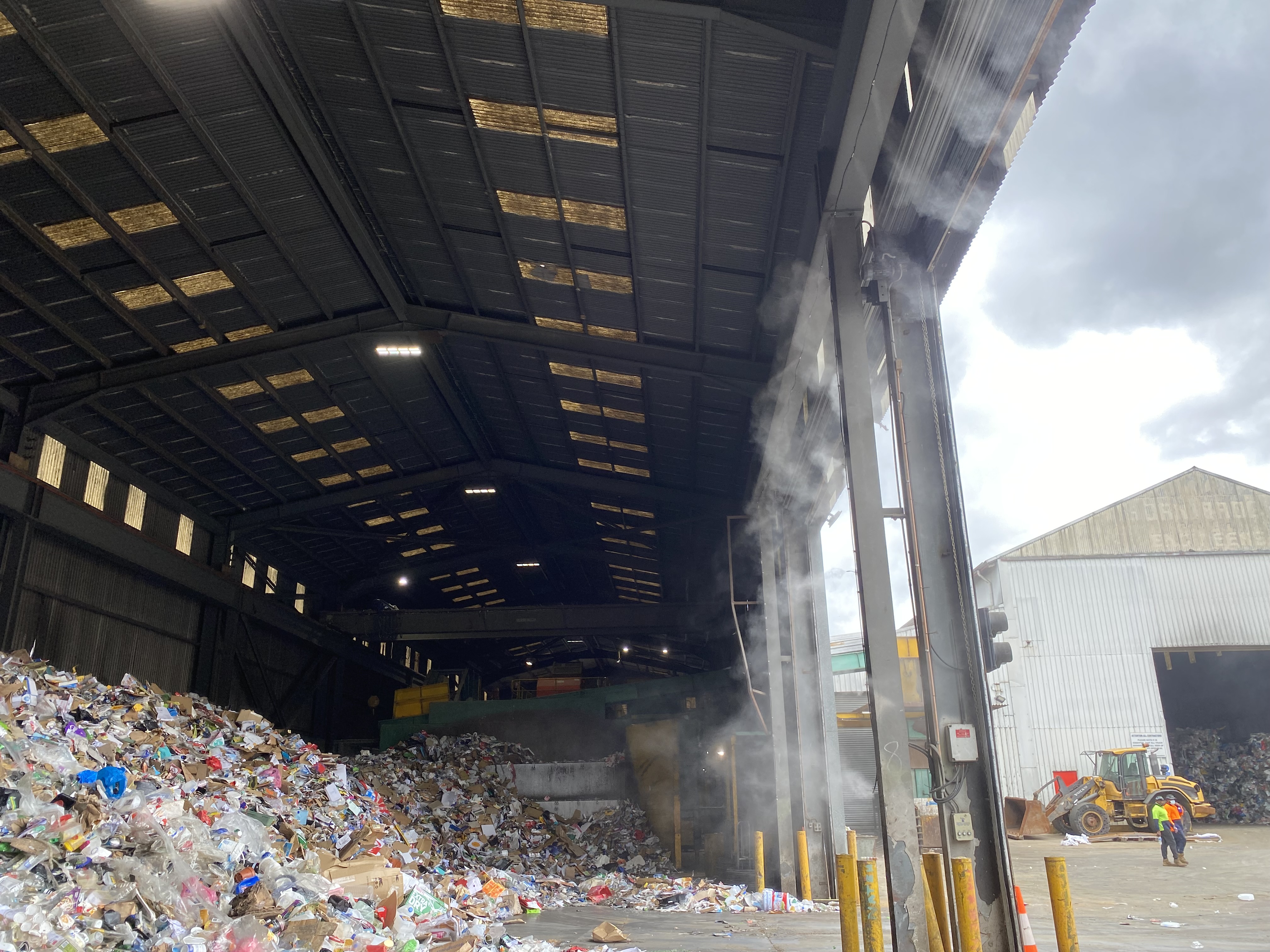
EPA guidance documents consistently identify at-source suppression as the most effective control measure for dust at waste transfer facilities. "At source" means the suppression is applied at the point where dust is generated , the tipping floor, the conveyor transfer points, the shredding area , rather than attempting to contain dust after it has become airborne.
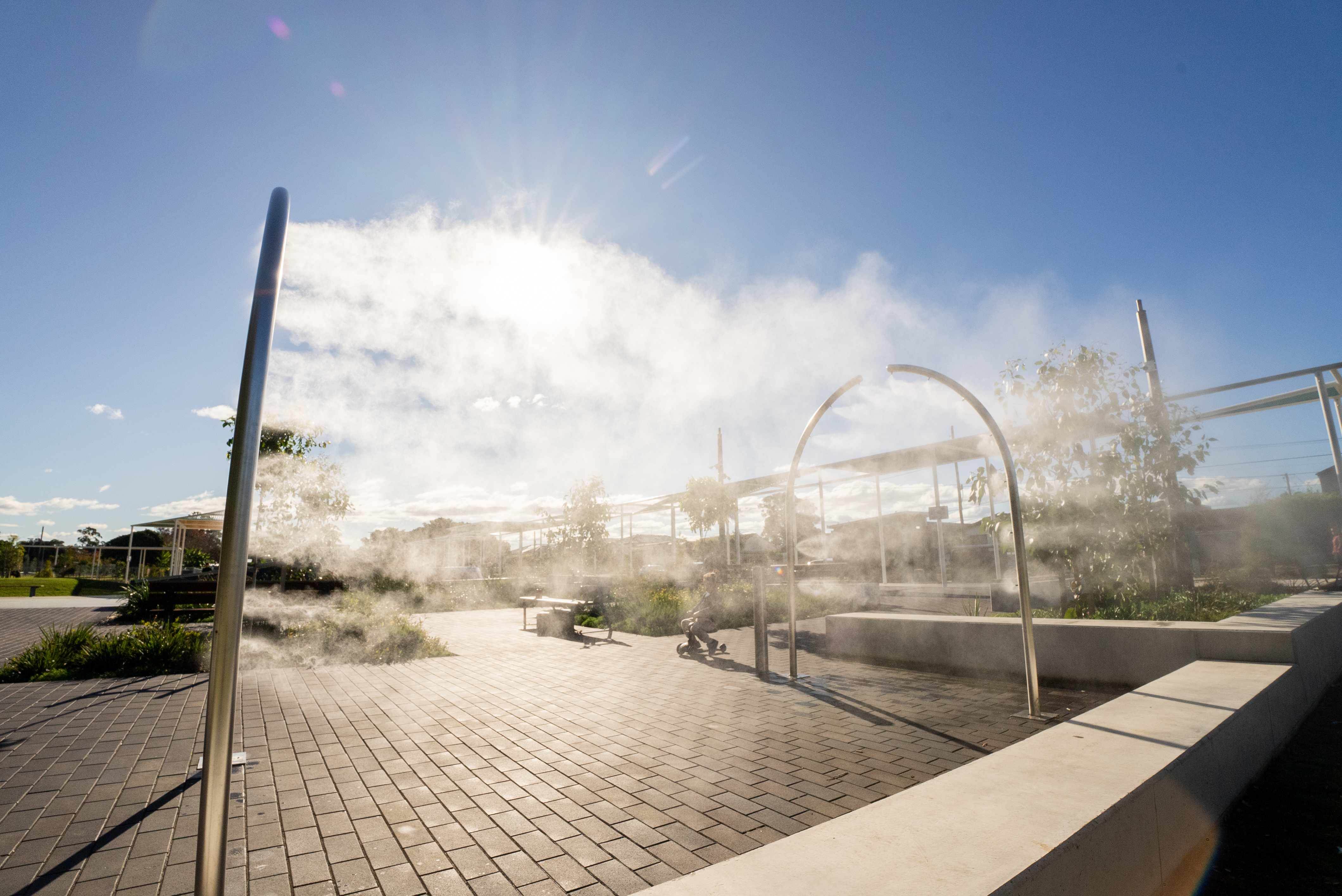
High-pressure misting systems operate by fragmenting water into ultra-fine droplets typically in the 10–50 micron range. Droplets in this size range collide with and bind to airborne dust particles, causing them to coagulate and settle out of suspension. The physics mirrors that of natural rainfall but at a droplet size calibrated to the dust particle size actually present on site.
This approach satisfies the "best practice" requirement in EPA licence conditions because it addresses the dust generation mechanism directly, rather than relying on perimeter barriers, wind breaks, or other measures that reduce dust migration rather than preventing generation.
Common Failure Modes at Waste Transfer Stations
Water cannon and truck-mounted spraying
Water cannon systems are commonly used as a first response to visible dust. The problem is that they are operator-dependent , they only work when an operator is present and actively using them , and they typically apply water at a droplet size that is too large to be effective against fine inhalable particles. They also risk wetting product or creating runoff. Regulators understand this distinction: intermittent, operator-dependent measures do not satisfy a continuous licence condition.
Spray systems that wet product
Overhead spray systems using standard irrigation nozzles at low pressure generate large droplets that saturate material rather than suppressing airborne dust. At a waste transfer station, wetting waste product creates additional problems: increased leachate, material handling difficulties, and potential contamination issues. The system then gets turned off by operations staff because it creates more problems than it solves , which means the licence condition goes unmet.
Reactive rather than automated operation
Systems that only run when someone turns them on are not compliant with conditions that require continuous dust management during operating hours. Automated systems with temperature and wind speed triggers, run-hour logs and tamper-evident controls provide the operational record that demonstrates the system was running when it needed to be.
How Fixed High-Pressure Misting Systems Satisfy EPA Conditions
A correctly designed fixed high-pressure misting system at a waste transfer station addresses the three key elements of an EPA dust licence condition: the physical suppression requirement, the best practice management requirement, and the monitoring and record-keeping requirement.
Physical suppression: High-pressure systems operating at 50–70 bar fragment water into droplets in the 10–30 micron range. This droplet size is matched to the particle size distribution of dust generated at waste facilities, where PM10 and PM2.5 fractions are the primary compliance concern. Correctly designed nozzle arrays provide full coverage of dust generation zones with sufficient dwell time for particle capture.
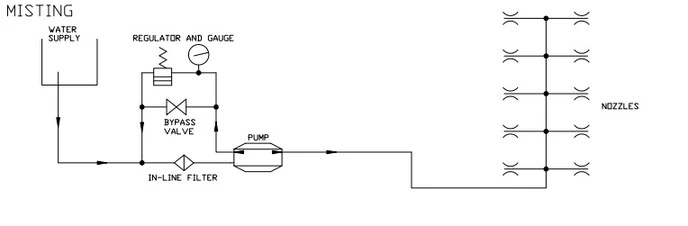
Best practice management: Fixed automated systems are consistently identified in EPA guidance as representing best practice. A system with documented hydraulic design, calibrated nozzle selection, RO filtration (to prevent nozzle clogging and maintain consistent droplet size), and automated operation based on operational status sensors satisfies the management plan requirement.
Record-keeping: Modern control panels log run hours, activation triggers, fault conditions and maintenance records. This data is exportable and forms the operational log that demonstrates the system was functioning correctly during the monitoring period.
The Compliance Documentation Set
When an EPA officer investigates a dust complaint or conducts a routine audit, the documentation you need to produce typically includes:
- System design documentation , hydraulic design calculations, nozzle selection criteria, coverage zone maps, water supply and filtration specifications.
- Commissioning records , installation inspection records, pressure test results, nozzle flow rate verification, coverage testing results.
- Operational logs , system run hours, activation records, fault logs, maintenance history.
- Particle count data , where monitoring conditions apply, particulate monitoring results from the relevant monitoring points.
- Maintenance records , filter change records, nozzle inspection and replacement records, annual service reports.
The completeness of this documentation set is often as important as the physical system itself. A well-designed system with no documentation record provides little defence against an EPA notice. A fully documented system , even where an exceedance has occurred , demonstrates that the licensee is operating in good faith and has implemented the required controls.
Responding to a Dust-Related Licence Notice
If you have received a prevention notice, pollution reduction program requirement, or direction to comply relating to dust, the standard EPA response pathway requires you to demonstrate that you have identified the source of the exceedance and implemented controls adequate to prevent recurrence. A properly specified and installed fixed misting system, with supporting documentation, forms the core of that response.
Regulators are looking for evidence of genuine effort , a documented system with operational records is substantially more persuasive than a written dust management plan that describes controls not actually installed. The key is to move from a documented intention to a documented installation with verifiable operational records as quickly as possible.
youmist designs and installs fixed high-pressure dust suppression systems that satisfy EPA licence conditions , including full compliance documentation for system design, commissioning and operational records.