For operators of waste transfer stations, recycling facilities, food processing plants and composting operations, a single odour complaint lodged with the EPA can trigger a chain of regulatory events that is difficult and expensive to stop once it starts. Understanding that chain , and positioning your facility correctly before it begins , is the difference between a manageable compliance interaction and a formal direction to cease operations.
This article covers how the EPA investigates and escalates odour complaints, how odour is measured and assessed, why at-source suppression systems change your regulatory position, and what you need to have in place before you receive a notice.
The EPA Enforcement Pathway for Odour Complaints
When a member of the public lodges an odour complaint with the NSW EPA, the complaint is recorded and assessed against the complainant's location, the facility's licence conditions, and any previous complaint history. The pathway that follows typically looks like this:
- Complaint intake and assessment , The EPA records the complaint and determines whether it warrants investigation. Isolated complaints may be noted without action. Multiple complaints from different locations over a short period trigger a more formal response.
- Preliminary investigation , An EPA officer may conduct a site inspection, often unannounced, to assess odour at the site boundary. The officer uses a combination of on-site observation and, in some cases, field olfactometry or electronic nose equipment to document odour presence and intensity.
- Notice of investigation or warning , Where the EPA believes odour is emanating from the facility in breach of licence conditions, the operator receives formal notice. This notice is often accompanied by a requirement to submit an odour management plan or demonstrate what controls are in place.
- Pollution reduction program (PRP) or prevention notice , Where the response is inadequate or the breach continues, the EPA may issue a PRP requiring specific works to be undertaken, or a prevention notice that prohibits certain operations until controls are in place.
- Penalty notices and prosecution , Continued breach after a notice can result in on-the-spot penalty notices (currently up to $15,000 per offence for corporations under the POEO Act) and, in serious cases, criminal prosecution.
The enforcement pathway is not linear , the EPA can skip steps when they believe a serious or ongoing breach is occurring. A facility with a history of complaints, or one that fails to respond substantively to an initial notice, can move directly to penalty notices or licence variation.
How Odour Is Measured and Assessed
Odour is notoriously difficult to measure objectively, but the EPA and Australian Standard AS 4323.1 provide a framework for assessment. The primary unit is the odour unit (OU/m³), measured by dynamic olfactometry , a panel of trained human assessors determining the dilution ratio at which an odour is just detectable.
Typical licence conditions for waste facilities specify a maximum odour level at the site boundary, commonly expressed as a number of OU/m³ at the 99.5th percentile (i.e., not exceeded more than 0.5% of the time) or as an annual average. Boundary conditions of 2–7 OU/m³ are common for residential neighbours, with higher limits for industrial buffers.
EPA officers also conduct qualitative assessments , documented site inspections where the officer records the presence, intensity and character of odour at the boundary. These qualitative records are admissible evidence and are often the primary basis for enforcement action at facilities where formal monitoring is not continuously required.
At-Source Suppression vs Masking: Why the Distinction Matters
One of the most common errors operators make when responding to an odour complaint is implementing odour masking , applying deodorant sprays, neutralising mists or fragranced compounds that overlay the odour without reducing its concentration. Masking can reduce the perceptible unpleasantness of odour temporarily, but it does not reduce OU/m³ at the boundary, and it does not address the generation mechanism.
Regulators understand this distinction. An EPA officer evaluating your odour management response is looking for evidence that you have addressed the source , not masked the symptom. A deodorising spray in a tipping hall that continues to generate malodourous air at high volume rates will not satisfy a licence condition, and the EPA's written guidance explicitly notes that masking is not an acceptable substitute for at-source control.
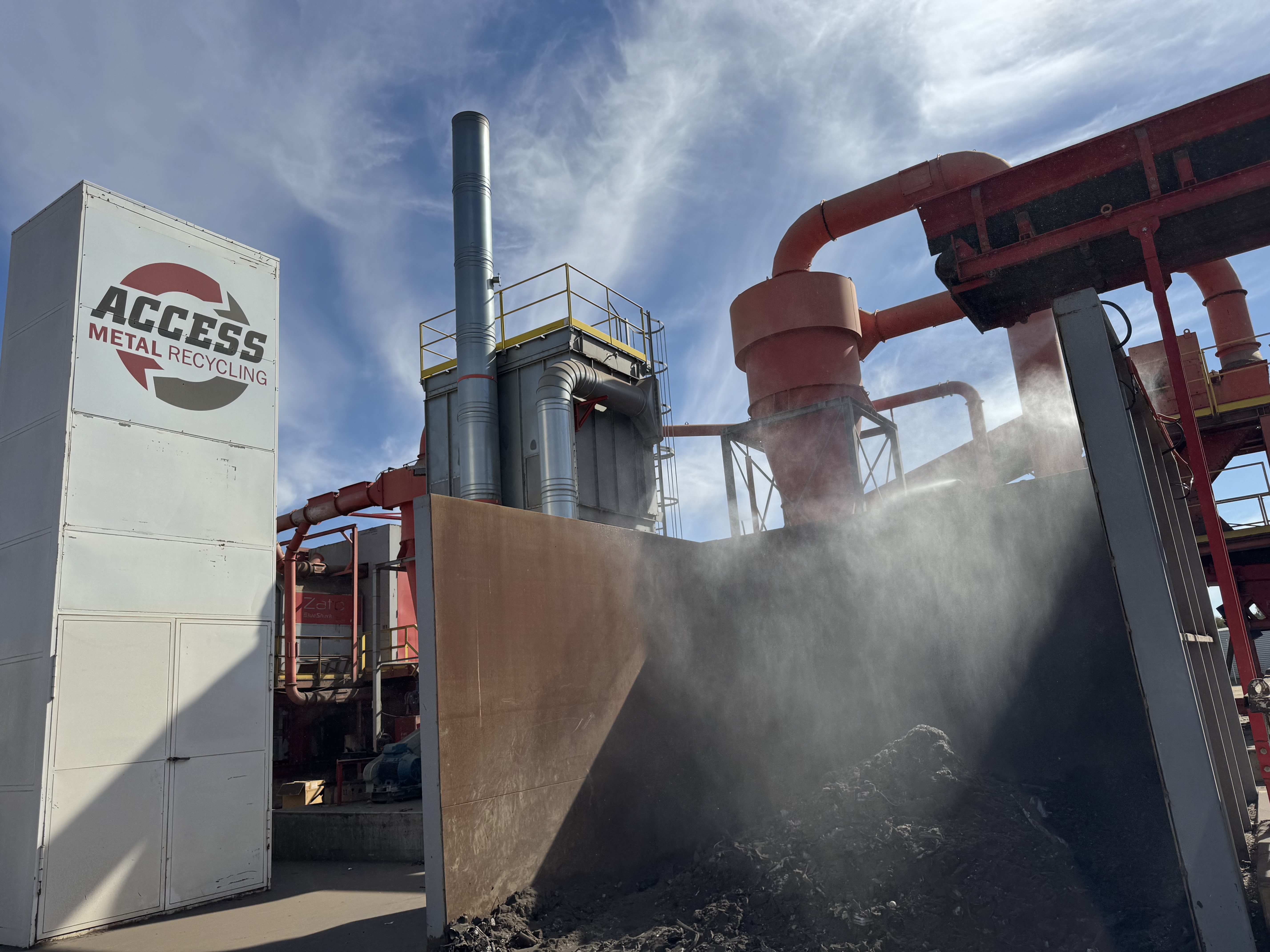
High-pressure misting systems used for odour control operate on a different principle. Correctly formulated biological or chemical odour-neutralising solutions are atomised into ultra-fine droplets that penetrate the odour plume and chemically react with or encapsulate odour-causing molecules , reducing their concentration and altering their chemical structure before they reach the boundary. This is demonstrable suppression, not masking.
How a Documented Fixed System Changes Your Position
When the EPA investigates an odour complaint, your position changes significantly depending on what you have installed and documented. An operator with no formal odour control system faces the default presumption that the facility is operating without adequate controls , which is a prima facie breach of most licence conditions that require best practice management.
An operator with a documented fixed misting system , with design records, commissioning reports, operational logs showing run hours, and maintenance records , has a substantively different case to make. The documentation demonstrates that:
- Controls were designed specifically for the facility's odour generation profile
- The system was correctly commissioned and verified as operational
- The system runs during operational periods when odour generation occurs
- The system is maintained to manufacturer specification
Even where an exceedance has occurred, this documentation shifts the regulatory conversation from "do you have controls?" to "why did controls fail on this occasion?" , a much more manageable position.
What Regulators Need to See in Your Response
When responding to an EPA odour notice, the response must address four elements to be taken seriously: identification of the odour source, description of existing controls, evidence that controls are operational, and a plan for any additional measures where existing controls are found to be inadequate.
A response that says "we have implemented odour control measures" without supporting documentation will not satisfy the EPA. A response that attaches a system design specification, commissioning report, and operational log for the preceding 90 days demonstrates that the facility has taken the obligation seriously and that the operator is engaging in good faith.
Where the EPA accepts that controls are adequate but an exceedance has occurred due to a specific operational event , a large delivery of contaminated material, an equipment failure, unusual weather conditions , the enforcement response is typically limited to a warning and a requirement to report any future exceedances. This is a substantially better outcome than a PRP or prevention notice.
youmist designs and installs fixed at-source odour suppression systems for waste, recycling and food processing facilities , with full compliance documentation ready for EPA submission.