Data centre thermal management is a solved problem under normal operating conditions. Precision cooling units, hot aisle/cold aisle containment, variable speed drives on fans and pumps, economisers , the toolset is mature and well understood. The problem that is much less discussed is what happens to the thermal environment of a data centre during a grid power outage when backup generators come online.
During generator operation, two compounding problems emerge that can push the data centre into a thermal condition its cooling system was not designed to handle: generator enclosure heat rejection and condenser air recirculation. Both problems are worst during hot weather , exactly when grid power is most likely to fail. And both can be addressed by a well-specified misting system designed for data centre requirements.
The Generator Enclosure Heat Problem
Diesel generators used for data centre backup power are typically installed in acoustic enclosures , either external pad-mounted units or basement and rooftop plant rooms. These enclosures contain the engine, alternator, radiator, exhaust silencer and ancillary systems. Under load, a large generator produces enormous heat: a 1,000 kVA unit running at 80% load produces approximately 300–400 kW of waste heat from the cooling system alone, plus heat from the exhaust and engine surfaces.
This heat is exhausted from the enclosure through ventilation louvres, typically on the radiator outlet side. In well-designed installations, this exhaust air path is directed away from air intakes for the data centre's HVAC equipment. In many real-world installations , particularly those where the generator was added after the original building design , the exhaust path is less than ideal.
When a generator operates during hot weather, the exhaust air from the enclosure can be 15–25°C above ambient temperature. If this hot exhaust stream influences the air entering the data centre HVAC equipment , even partially , it degrades the available cooling capacity at exactly the moment when the cooling system is under maximum load.
The Condenser Air Recirculation Problem
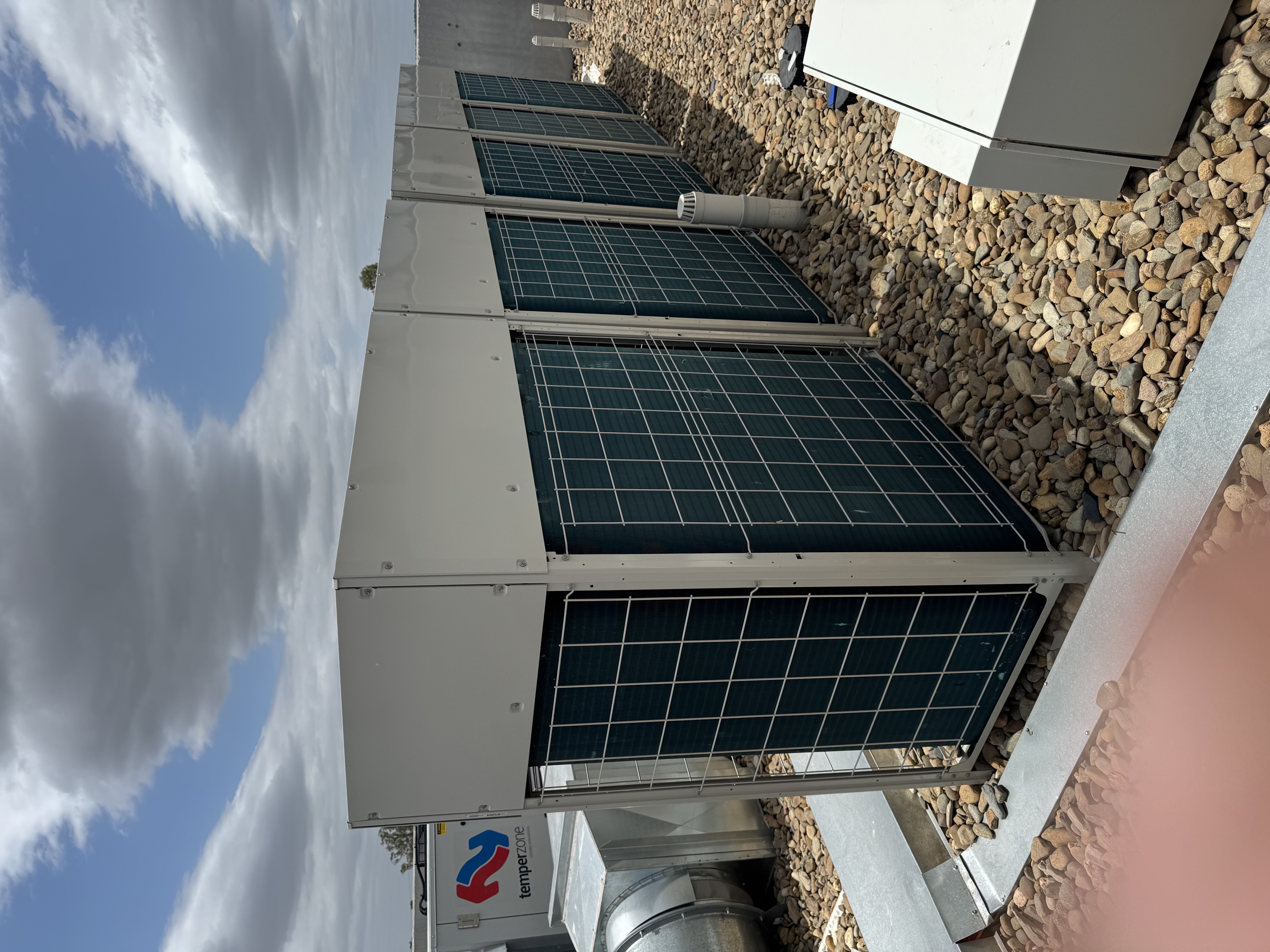
A separate but related problem affects the air-cooled condensers and DX units that are the primary cooling systems for many data centres. Air-cooled condensers reject heat by passing condenser air across refrigerant coils. The efficiency of this process depends directly on the temperature of the inlet air. As inlet air temperature rises, head pressure increases, compressor work increases, and cooling capacity decreases.
Condenser air recirculation occurs when hot exhaust air from the condenser fan discharge re-enters the condenser inlet , typically due to inadequate separation between inlet and discharge, buildings or plant room walls that create local recirculation zones, or prevailing wind conditions that drive exhaust air back toward the intake.
On a hot day, a condenser unit that should see 35°C inlet air may actually see 40–45°C if recirculation is occurring. This can reduce cooling capacity by 10–20% , capacity the data centre cannot afford to lose. During generator operation, when the building thermal envelope is already stressed, this margin matters enormously.
How the Problems Compound
The two problems compound during an outage event in the worst possible way. Consider a data centre on a 38°C summer afternoon when the grid fails:
- Generators start and ramp to load within 10–15 seconds
- Generator enclosures begin exhausting hot air at 55–60°C into the plant room or external yard
- This hot exhaust migrates toward HVAC condensers and cooling equipment, raising effective inlet temperatures
- Simultaneously, condenser air recirculation , already occurring due to ambient temperature and wind conditions , worsens as the surrounding air mass heats up
- HVAC cooling capacity degrades at the same time IT heat load remains constant or increases (some equipment draws more power during post-failure recovery)
- Inlet temperatures in the data hall begin to rise
The result is a thermal event that the cooling system cannot arrest without intervention. In a Tier III or Tier IV data centre with redundant cooling paths, there may be margin. In a Tier II facility operating at normal efficiency, a summer outage on a hot day is a genuine risk event.
Misting as the Mitigation Strategy
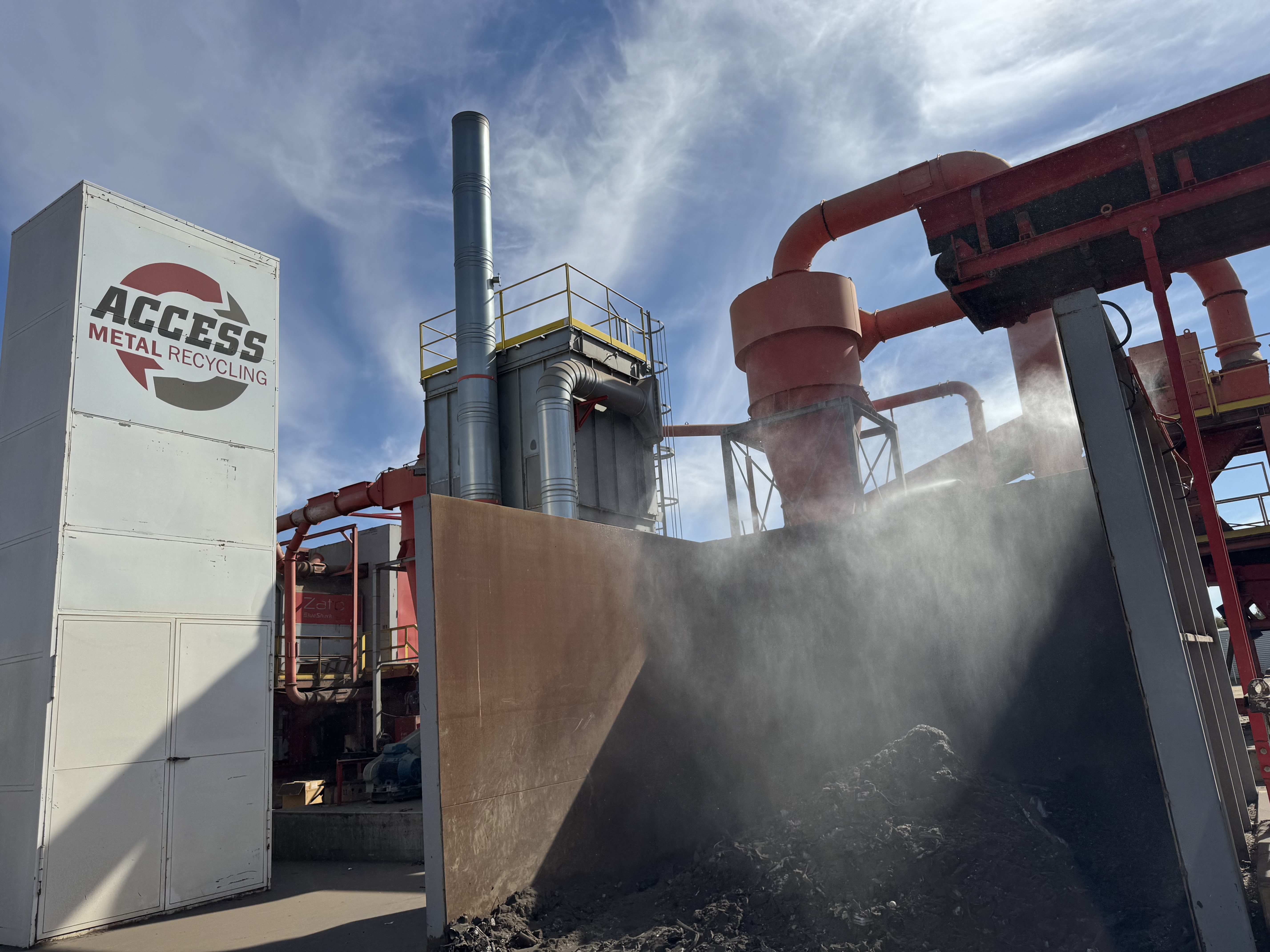
High-pressure misting applied to the condenser inlet air stream addresses both problems simultaneously. By pre-cooling the air entering the condenser coils, misting restores the cooling capacity degradation caused by high ambient temperature, generator enclosure heat influence, and recirculation effects.
The physics are straightforward. Evaporative cooling of the inlet air reduces effective wet-bulb temperature. For each degree Celsius of inlet temperature reduction, condenser head pressure drops, compressor work decreases, and cooling capacity improves by approximately 1–2%. In practical terms, reducing effective inlet temperature from 42°C to 35°C restores 7–14% of cooling capacity , often the difference between a managed event and a thermal shutdown.
The system does not need to operate continuously. Misting triggered by condenser inlet temperature above a set threshold (e.g., 32°C), automatically deactivated when ambient temperature drops, provides the additional margin exactly when it is needed.
Data Centre Design Requirements for Misting Systems
A misting system for data centre application is not a standard commercial cooling installation. The environment imposes requirements that go beyond those of typical hospitality or public realm applications.
High availability and failsafe design
The misting system must itself be highly available. It cannot become a single point of failure that takes itself offline during the outage event it is intended to mitigate. This means:
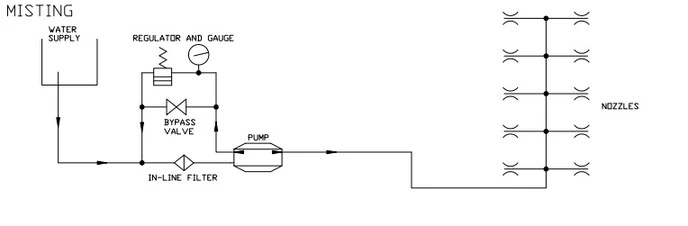
- Dual pump configuration with automatic changeover on primary pump failure
- UPS-backed controls and pump power supply , the system must remain operational when grid power fails and generators are running
- Self-contained water storage with sufficient capacity for the expected outage duration (minimum 4 hours at peak consumption for Tier II/III sites)
- Automatic failsafe to non-wetting state (system deactivates rather than continuing to run with degraded performance that could cause wetting near electrical equipment)
Non-wetting is non-negotiable
In a data centre environment, any water ingress into electrical equipment or data halls represents an unacceptable risk. The misting system must be designed and commissioned to guarantee a non-wetting outcome at all operating conditions. This requires:
- High-pressure system (70–100 bar) producing droplets in the 10–20 micron range
- Humidity lockout to prevent operation when ambient RH is too high for complete droplet evaporation
- Anti-drip nozzles that prevent droplet release when system is in standby or deactivating
- Minimum 1.2 m clearance between nozzle discharge and any electrical equipment, with additional clearance for downward-facing equipment
- Flow monitoring with immediate system shutdown on flow anomaly (broken nozzle or line would cause localised wetting)
Alarm integration
The misting system must integrate with the data centre's DCIM (Data Centre Infrastructure Management) or BMS platform. Required data points include system operational status, pump running status, pump fault alarms, filtration fault alarms, water storage level, and condenser inlet temperature sensor readings. All fault conditions must generate alerts via the existing alarm management system , not via a standalone misting-system alarm that may not be monitored outside business hours.
Water quality
Reverse osmosis filtration is mandatory for data centre misting applications. Mineral scale accumulation on condenser coils , possible if unfiltered water is used , degrades heat exchange performance. RO permeate with TDS below 50 ppm prevents scale formation. An auto-flush membrane maintenance cycle prevents membrane fouling.
Installation and Commissioning
Physical installation of misting nozzle lines to condenser inlet screens requires coordination with HVAC engineers to confirm that nozzle positioning does not restrict airflow or create turbulence that degrades condenser performance. Nozzle lines should be installed on the upstream face of condenser coil screens, parallel to coil face, at sufficient distance that droplets are fully entrained in the inlet air stream before reaching the coil surface.
Commissioning for a data centre misting system requires documented non-wetting verification under worst-case conditions (maximum nozzle count operating, humidity near the lockout threshold), witnessed pump changeover testing, and confirmed UPS-backed operation through a simulated power transfer. These are not optional , they are the only means by which the facility operations team can be confident the system will perform as required during an actual outage event.
youmist designs and installs high-availability misting systems for condenser pre-cooling in data centres, telecommunications facilities and other critical infrastructure. We provide UPS-backed systems with BMS integration, dual-pump redundancy, and documented non-wetting commissioning , meeting the reliability and safety standards critical environments require.
Prioritising the Assessment
Not every data centre has the generator enclosure heat and condenser recirculation problems in combination, and not every site has a summer outage risk profile that justifies the investment in a high-availability misting system. The decision to specify misting for a data centre cooling application should follow a thermal assessment that quantifies:
- Current condenser inlet temperature under peak summer conditions with generator running
- Measured or modelled recirculation contribution to inlet temperature
- HVAC cooling capacity under worst-case inlet conditions versus IT heat load
- Available thermal margin before IT inlet temperature reaches shutdown threshold
For facilities where that margin is less than 5°C under worst-case conditions, misting pre-cooling is a straightforward risk mitigation measure. For facilities where the margin is comfortable, the same assessment may identify simpler interventions , physical baffles to break recirculation paths, repositioning of generator exhaust louvres , that address the problem at lower cost. The misting system remains available as an additional layer if the simpler interventions prove insufficient.
The goal is not to add equipment for its own sake. It is to ensure that when the grid fails in summer , which will happen , the cooling system can hold the data hall within operating temperature limits long enough to restore power or execute an orderly shutdown. That capability is the definition of thermal resilience, and for any facility with meaningful uptime obligations, it is worth engineering properly.