On a 38°C summer day in Sydney or Melbourne, the air-cooled condensers on a commercial building's rooftop HVAC plant are working at the edge of their design capacity. The hotter the ambient air entering the condenser coils, the more energy the compressor must expend to reject heat, and the lower the system's coefficient of performance (COP). It is a basic thermodynamic reality that pushes energy costs sharply upward on exactly the days when cooling demand , and electricity prices , are also at their peak.
High-pressure evaporative pre-cooling addresses this problem at its source by reducing the temperature of air entering the condenser coils. This article explains the physics of how this works, what efficiency gains are achievable in practice, how systems are designed to prevent wetting of coils and components, and how to calculate the payback period for a typical commercial installation.
How Evaporative Pre-Cooling Works
When water evaporates, it absorbs latent heat from the surrounding air. High-pressure misting systems , operating at 50–70 bar , fragment water into droplets typically in the 10–20 micron range. Droplets in this size range flash-evaporate almost immediately on contact with warm, dry air, absorbing latent heat from the air stream and reducing its dry-bulb temperature before it reaches the condenser coil inlet.
The process is adiabatic , no energy is added to the system. The cooling effect is thermodynamically equivalent to moving along the psychrometric chart at constant wet-bulb temperature: the dry-bulb temperature falls, relative humidity rises, but the total energy content of the air is unchanged. The amount of cooling achievable is limited by the difference between the dry-bulb and wet-bulb temperatures (the wet-bulb depression), which determines how much water can be evaporated before the air is saturated.
In Sydney, Melbourne and most major Australian cities, summer afternoons typically exhibit wet-bulb depressions of 6–12°C, meaning 6–12°C of cooling potential is available from evaporation alone. Well-designed pre-cooling systems can capture 70–85% of this potential, delivering 4–10°C of inlet air temperature reduction under typical operating conditions.
The Effect on HVAC Efficiency
Air-cooled chiller and split-system condensing units are rated by manufacturers at a standard ambient temperature , typically 35°C. Every degree of increase above this design point reduces the system's COP and increases energy consumption. Conversely, every degree of reduction below this point improves efficiency.
The relationship is approximately linear across the relevant temperature range. For most commercial air-cooled HVAC equipment, a 1°C reduction in condenser inlet temperature produces a 1–2% reduction in energy consumption. A well-performing pre-cooling system delivering 6°C of inlet temperature reduction therefore produces approximately 6–12% energy savings on the HVAC plant during operation. Systems delivering up to 10°C of reduction , achievable under high wet-bulb depression conditions , can produce up to 20–25% efficiency improvement.
The efficiency gains are largest precisely when they are most valuable: on hot, dry days when electricity demand charges are at their peak, and when HVAC systems are most likely to be approaching or exceeding their rated capacity limits.
Non-Wetting Installation: Why It Matters
A critical design requirement for any HVAC pre-cooling installation is that the misting system must not wet the condenser coils, fins, fans or electrical components. Wet coils corrode. Wet fans suffer bearing failure. Droplets carried into the coil face create mineral scale deposits that impede airflow and reduce heat transfer. A poorly specified pre-cooling system that wets the plant it is intended to help can cause significant maintenance costs and equipment damage.
High-pressure systems in the 10–20 micron droplet range are designed to flash-evaporate before they travel far enough to contact coil surfaces. Nozzle placement is critical: nozzles are positioned upstream of the coil face, at a distance and angle that allows sufficient dwell time for evaporation but prevents liquid water from reaching the coil surface. This requires a proper hydraulic design that accounts for the specific HVAC equipment, airflow rate, ambient conditions and nozzle spacing.
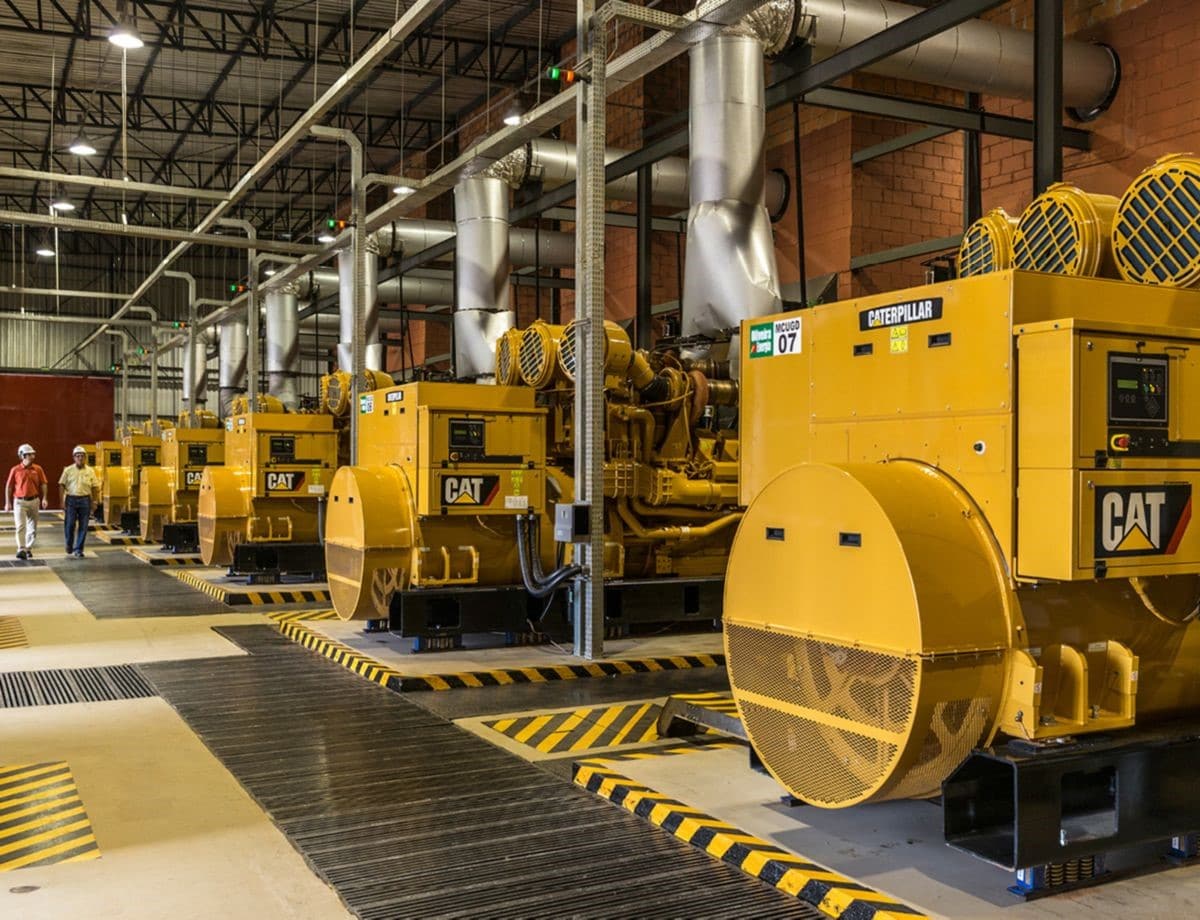
Systems designed on these principles are commonly used at the condenser coil inlets of shopping centres, data centres, commercial office buildings and industrial cooling plant , with no adverse impact on the equipment below.
Automated Operation: Temperature Trigger and Humidity Lockout
Pre-cooling systems are most efficient when they operate only when evaporative cooling potential exists. On humid days , when the wet-bulb depression is small , evaporation is limited and the efficiency gain is marginal. Running the system continuously regardless of conditions wastes water and provides little benefit.
Correctly designed systems incorporate two control elements: a temperature trigger that activates the system when ambient temperature exceeds a set point (typically 28–30°C), and a humidity lockout that deactivates the system when relative humidity exceeds a set point (typically 75–80%), indicating that evaporative potential is exhausted. This control logic ensures the system runs when it is effective and shuts off when it is not.
Payback Period Calculation
A typical commercial pre-cooling installation for a 100-tonne chiller system on a Sydney building might deliver the following results:
- Average inlet temperature reduction: 6°C on operating days above 28°C
- Operating hours above 28°C in Sydney: approximately 400–500 hours per year
- HVAC energy consumption at full load: approximately 120 kW
- Efficiency improvement at 6°C reduction: approximately 10% = 12 kW reduction
- Energy saving per year: 12 kW × 450 hours = 5,400 kWh
- Value at $0.28/kWh: approximately $1,512 per year in direct energy savings
Demand charge savings , where the reduction in peak demand reduces the maximum demand component of the electricity tariff , can add materially to this figure, often doubling the economic benefit for buildings on time-of-use tariffs.
Typical installation costs for commercial pre-cooling systems range from $8,000 to $25,000 depending on the scale and complexity of the condenser array. At direct energy savings alone, payback periods of 4–8 years are common. Including demand charge savings brings this to 2–5 years for most commercial applications.
Design Considerations
Several design factors are critical to a correctly performing installation:
- RO filtration: High-pressure systems require reverse osmosis filtered water to prevent mineral deposits on nozzles and coil surfaces. Unfiltered mains water will scale nozzles and reduce performance within weeks.
- Anti-drip nozzles: Nozzles must incorporate anti-drip valves to prevent dripping when the system shuts down. Drips that contact hot coil surfaces evaporate and leave mineral deposits.
- Nozzle placement: Nozzles should be positioned to create uniform coverage of the coil face without creating zones of heavy wetting adjacent to the nozzle exit.
- Pump sizing: The high-pressure pump must be sized for the specific nozzle count and flow rate, with adequate reserve capacity for pressure stability.
youmist designs and installs high-pressure HVAC pre-cooling systems for commercial buildings , non-wetting installation, automated temperature-triggered operation, RO filtration as standard.